
The Quiet Luxury of a Well-Designed Bathroom Vanity
There is a particular kind of luxury that does not announce itself.
It isn’t found in excess or ornamentation, but in restraint—in the quiet confidence of a space that has been carefully considered, where every line, proportion, and material serves a purpose. Nowhere is this more apparent than in the bathroom, and more specifically, in the vanity.
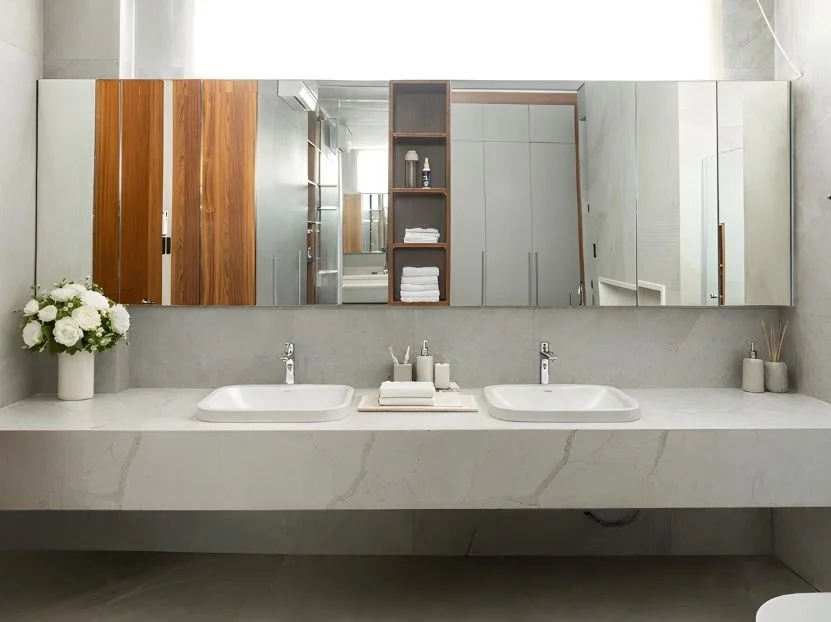
In many of today’s most refined homes—from the vertical elegance of Makati residences to the expansive properties of Ayala Alabang, and in select private homes across the Philippines—the bathroom vanity has evolved beyond function. It has become a study in balance.
A Matter of Proportion
The most compelling spaces begin not with materials, but with proportion.
A well-designed vanity understands the room it inhabits. It aligns with architectural lines, respects movement within the space, and creates a natural sense of symmetry—often without the need for embellishment.
Double vanities, in particular, are less about duplication and more about rhythm. When done well, they introduce a quiet order that makes the space feel composed and effortless.
Material as Atmosphere
In tropical environments such as the Philippines, material selection carries both aesthetic and practical weight.
Warm wood tones soften the visual structure of cabinetry, while stone surfaces introduce a sense of permanence. Matte finishes, increasingly favored in high-end homes, absorb light rather than reflect it—lending a more subdued, contemporary character.
But beyond appearance, these materials must endure. Humidity, temperature shifts, and daily use all shape how a space ages. The most successful designs are those that anticipate this, choosing materials not only for how they look today, but for how they will settle over time.
The Art of Concealment
Luxury is often defined by what is not immediately seen.
A thoughtfully designed vanity conceals as much as it reveals—integrating storage in a way that preserves visual calm. Drawers glide open to reveal order, while surfaces remain uncluttered, allowing the architecture of the piece to take precedence.
This is particularly relevant in homes where daily routines are layered and dynamic. The ability to maintain clarity within the space, even at its busiest, is a hallmark of good design.
Consistency Across the Home
In more considered residences, the bathroom does not exist in isolation.
Its materials, tones, and detailing often echo the language of the broader home—whether through cabinetry profiles, finishes, or hardware choices. This continuity creates a sense of cohesion, allowing each space to feel connected rather than fragmented.
Across high-value homes in Makati, Ayala Alabang, and select residences throughout the Philippines, this approach is becoming less of a luxury and more of an expectation.
A Study in Restraint
Perhaps the most defining quality of a well-executed vanity is restraint.
It does not attempt to impress. It does not rely on trends. Instead, it settles quietly into the space, becoming part of the rhythm of everyday life.
And in doing so, it achieves something far more lasting.
Closing Reflection
In the end, a bathroom vanity is not simply a fixture—it is a reflection of how a home is designed to be lived in.
For those considering a more thoughtful approach to their space, a private consultation offers a more tailored starting point—guiding each step from design to build to installation with quiet precision.