
Why Most Luxury Homes Get Storage Wrong — And What Thoughtful Cabinetry Solves
Space, in itself, has never been the issue.
In many of today’s most expansive homes—from the layered residences of Makati to the open-plan properties of Ayala Alabang, and in select private homes across the Philippines—there is no shortage of square footage. And yet, even in these environments, something often feels unresolved.
More often than not, it comes down to storage.
When More Space Creates More Problems
It’s a common assumption: more space should naturally lead to better organization.
But without a clear strategy, additional space simply creates more areas to fill—and eventually, more visual noise. Open shelves become crowded. Cabinets become inconsistent. Rooms begin to lose their sense of structure.
In high-end homes, this is rarely a matter of quantity. It’s a matter of intention.
Storage That Interrupts, Rather Than Integrates
One of the most overlooked mistakes in luxury homes is treating storage as an afterthought.
Freestanding pieces are added where needed. Cabinetry is designed in isolation. Over time, the home becomes a collection of solutions, rather than a cohesive whole.
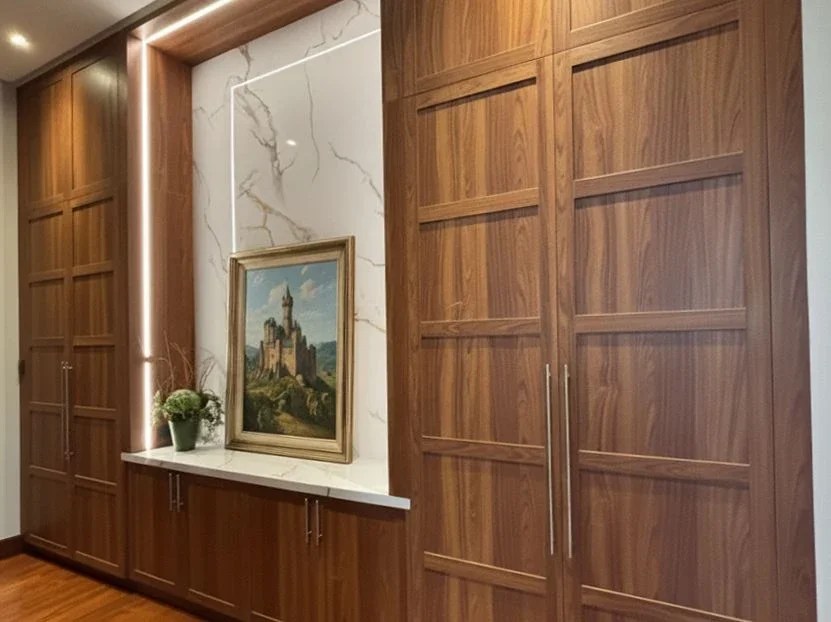
Thoughtful cabinetry, by contrast, is integrated from the beginning—aligned with walls, proportions, and architectural lines. It does not interrupt the space; it becomes part of it.
The Visibility Problem
Not everything needs to be seen.
In many homes, storage is overly exposed—whether through open shelving or poorly planned layouts. While visually appealing in theory, this often leads to clutter over time.
The most refined spaces understand the value of concealment:
Surfaces remain clean
Daily items are within reach, but out of sight
The room retains its sense of calm
This balance between accessibility and discretion is where design becomes truly effective.
Inconsistency Across Spaces
Another subtle issue is inconsistency.
Kitchen cabinetry may follow one design language, while wardrobes and bathroom storage follow another. Materials shift. Proportions change. Details don’t align.
In well-considered homes, cabinetry is approached holistically. There is a continuity in tone, finish, and proportion that carries from one space to the next—creating a sense of quiet cohesion.
When Storage Is Designed Around Lifestyle
Perhaps the most important distinction is this: storage should reflect how a home is actually lived in.
Not a template. Not a catalog.
But a response to:
Daily routines
Household dynamics
Long-term use
This is where custom cabinetry becomes less about filling space, and more about shaping it.
A More Considered Approach
In homes where every detail is intentional, storage does not call attention to itself.
It supports the space. It simplifies daily life. It allows the architecture—and the people living within it—to take precedence.
And in doing so, it becomes one of the most quietly defining elements of the home.
Closing Reflection
Well-designed storage is rarely noticed at first glance—but it is felt over time.
For those considering a more thoughtful approach to their home in Makati, Ayala Alabang, or in select residences across the Philippines, a private consultation offers a more tailored starting point—guided by a team experienced in bringing together design, build, and installation with quiet precision.