
Kitchen Design Philippines: 4 Styles Defining Luxury Homes in 2026
Designing a kitchen in the Philippines requires a delicate balance. You want the aesthetic appeal of a European showroom, but you need the durability to withstand the Metro Manila humidity, the tropical heat, and the heavy-duty demands of Filipino cooking.
In 2026, the "cookie-cutter" kitchen is out. Filipino homeowners are increasingly educated about design, often inspired by the exclusive home tours in Tatler Philippines, demanding spaces that are not just functional, but architectural statements.
At Canadian Kitchen Company, we have observed a shift in what affluent homeowners are asking for. It’s no longer just about storage; it’s about lifestyle. Here is a guide to the top kitchen design styles currently dominating the Philippine market and how our Semi-Modular Custom system brings them to life.
1. The Modern Minimalist (The "Condo" Aesthetic)
Best for: High-rise units in BGC, Makati, and Ortigas.
In the dense urban jungle, visual noise is the enemy. The Modern Minimalist design strips away everything unnecessary.
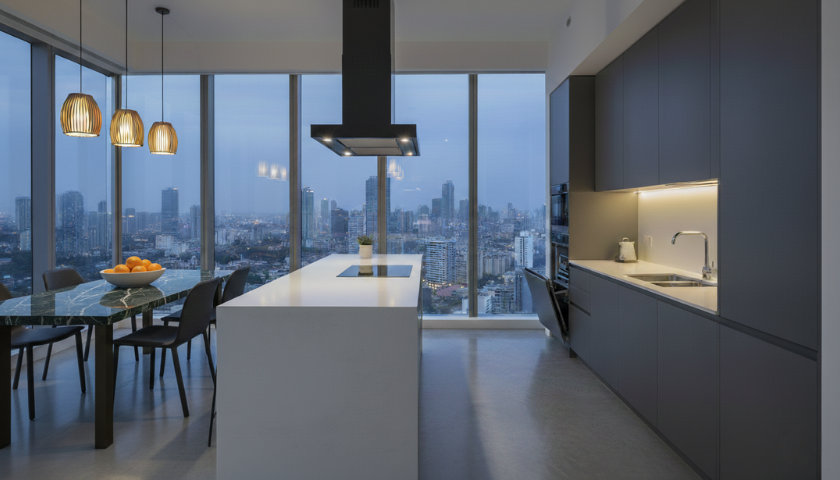
The Look: Flat-panel doors (slab style), no visible handles, and a monochromatic color palette. High-gloss white or matte charcoal are the top choices.
The Philippine Context: In smaller condo units, this design is crucial because it reflects light and makes the room feel larger.
The CKC Advantage: To pull this off, the gaps between cabinets must be microscopic. Standard local carpentry often leaves uneven gaps. Our semi-modular engineering ensures precise, uniform lines that create that "seamless wall" effect.
2. The "Hamptons" / Modern Classic
Best for: Large family homes in Alabang, Quezon City, and Subdivisions.
This is arguably the most popular luxury style in the Philippines right now. It bridges the gap between traditional warmth and modern clean lines.
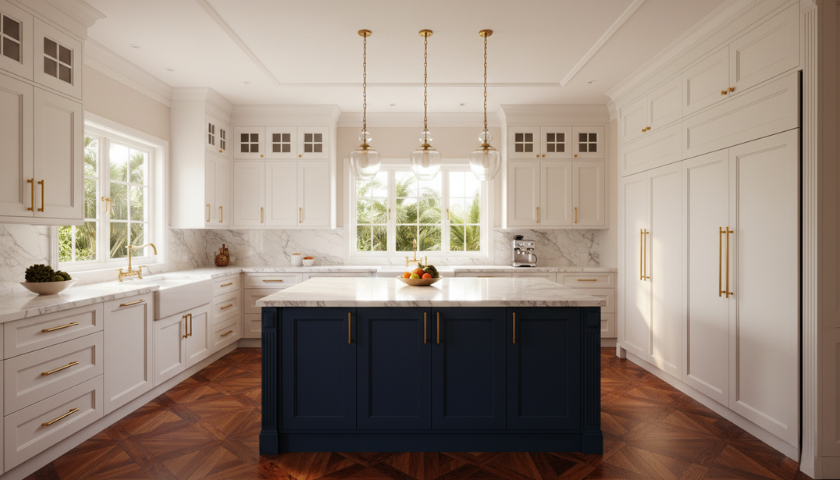
The Look: Shaker-style cabinet doors (doors with a recessed center panel), brass or gold hardware, and often a two-tone color scheme (e.g., white overheads with a navy blue island).
The Philippine Context: This style feels "homely" and substantial. It suits the Filipino family culture of large Sunday gatherings.
The CKC Advantage: A Shaker door requires precise joinery. If done poorly by a local carpenter, the paint cracks at the joints within a year. We use industrial-grade finishes that wrap the profile perfectly, ensuring the paint doesn't peel even in humid weather.
3. The Industrial Luxe
Best for: Bachelor pads, Lofts, and Creative spaces.
Industrial design in the Philippines has evolved. It’s no longer just "unfinished cement." It is now "Industrial Luxe."
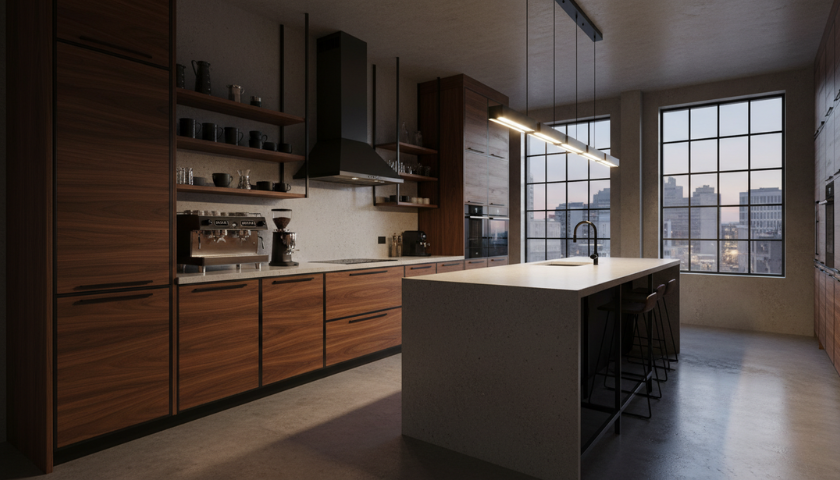
The Look: Dark wood grains (Walnut or Oak) paired with matte black metal accents and concrete-look Quartz countertops. Open shelving is often used to display expensive dinnerware or coffee equipment.
The Philippine Context: This style hides wear and tear beautifully. It is excellent for "active" kitchens.
The CKC Advantage: We offer textured laminates that mimic the deep grain of real wood but are actually moisture-resistant engineered materials. You get the look of solid timber without the risk of termites or warping.
4. The "Seamless" Wet & Dry Kitchen
Best for: Large estates with auxiliary service areas.
A uniquely Filipino requirement is the separation of the "Clean" (Show) kitchen and the "Dirty" (Service) kitchen. However, the trend is moving away from making the dirty kitchen look "cheap."
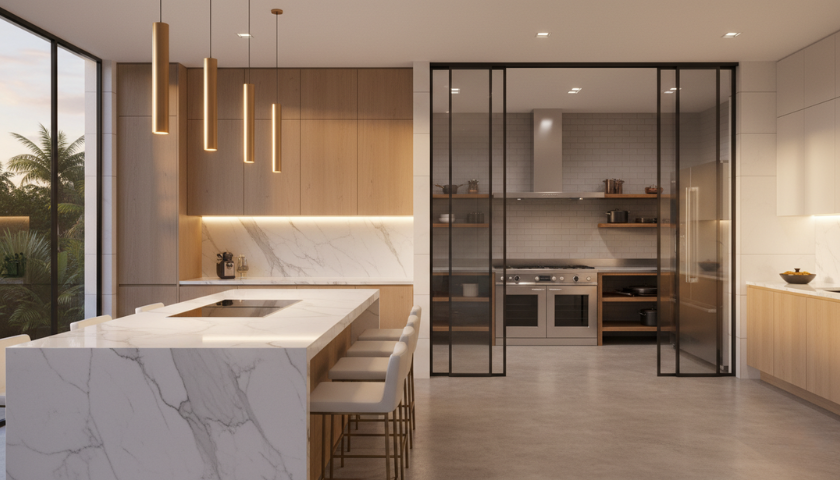
The Design Strategy:
The Show Kitchen: This is part of your living room. It features an island, hidden appliances (integrated fridge/dishwasher), and premium lighting.
The Service Kitchen: Located behind a hidden door or glass partition. It houses the heavy-duty gas burners and deep sinks.
The Cohesion: In 2026, we are designing these two spaces to flow together. We might use the same countertop material but switch to a more durable cabinet finish for the service area.
Critical Design Considerations for the Philippines
When browsing Pinterest for "Kitchen Design Philippines," keep these three local realities in mind:
1. The "Ipis" Factor (Hygiene)
No matter how clean your home is, pests are a reality in the tropics.
Design Solution: Avoid "kick-toecaps" that are hollow. We seal our cabinets to the floor or use aluminum plinths. Our semi-modular units are sealed systems, minimizing the gaps where pests can breed compared to hollow carpentry frames.
2. Humidity vs. Materials
The Philippines has an average humidity of 70-85%. Solid wood expands and contracts, leading to stuck drawers.
Design Solution: This is why Semi-Modular Custom using High-Pressure Laminates (HPL) on Marine-grade or moisture-resistant cores is superior. It remains stable regardless of the weather.
3. The "Sawsawan" Culture (Stain Resistance)
We love soy sauce, vinegar, and oil. Marble is beautiful, but it absorbs stains instantly.
Design Solution: We highly recommend engineered Quartz or non-porous sintered stone surfaces. They mimic the vein of marble but can withstand a spill of Toyo without leaving a permanent mark.
Why "Semi-Modular Custom" is the Future of PH Design
You might have a photo of a dream kitchen, but a standard modular supplier will tell you, "Sorry, we don't have a cabinet size for that corner." A carpenter will say, "I can build it," but the finish looks rough.
Canadian Kitchen Company sits in the sweet spot.
We take your design inspiration and engineer it to fit your specific Philippine floor plan to the millimetre. We customize the height for the taller Filipino generation, we customize the depth for your specific appliances, and we customize the look to match your vision.
Ready to design?
Don't settle for a generic kitchen. Bring your ideas to Canadian Kitchen Company, and let’s build a space that is uniquely yours. Book a private consult today.